Bond University’s Faculty of Health Sciences and Medicine is recognised for the excellence of its education and research. Its science, medical and allied health students graduate work-ready from day one and possess the leadership skills to improve local, national and global health and wellbeing.
Whether students aspire to take on the healthcare sector as an allied health clinician or an innovator, lead research in their field of choice, or practise as a medical doctor, an exciting career in the health sciences – and the opportunity to make a real difference to people’s lives - begins right here...
Innovation isn't just what we do - it's who we are
Our Faculty is also well-known for its willingness to pioneer new methodologies, practices and techniques in both the teaching and research arenas:
Our Medical Program offers the fastest pathway to gaining your Doctor of Medicine (MD) in Australasia; our students begin as undergraduates and complete their Bachelor of Medical Studies and Doctor of Medicine in just 4 years and 8 months. The Medical program was also the first in the country to introduce emotional intelligence testing as part of its student selection process.
We were the first University in Australia to offer a Doctor of Physiotherapy program in 2007.
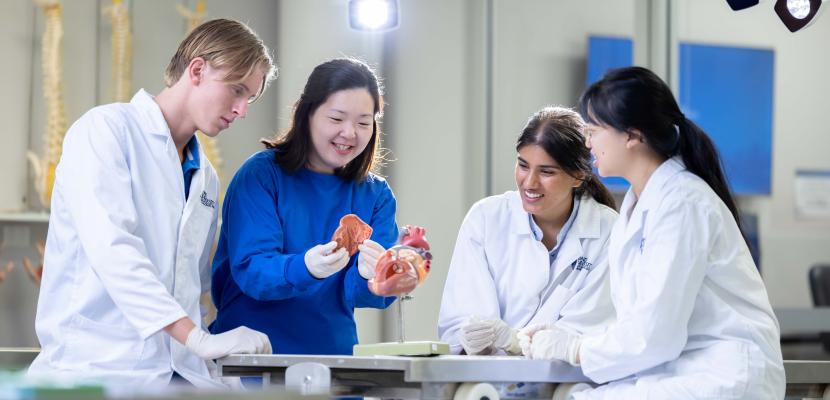
Our pioneering educators have invented technologies, in use at Bond and other institutions, that allow students to explore the human body in 3D and augmented reality.
The Institute for Evidence-Based Healthcare developed an award-winning process that decreased the time to produce a systematic review from 45 weeks to just 2 weeks.
Find programs in Faculty of Health Sciences and Medicine
Show me ... programs
Oops, something went wrong.
It’s a classroom… but not as you know it
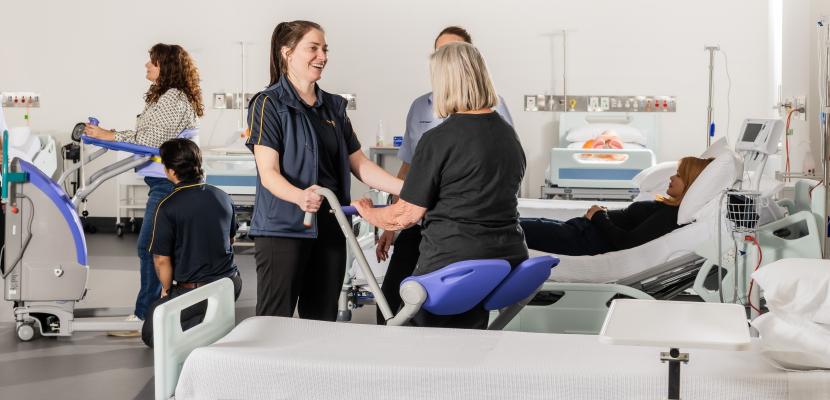
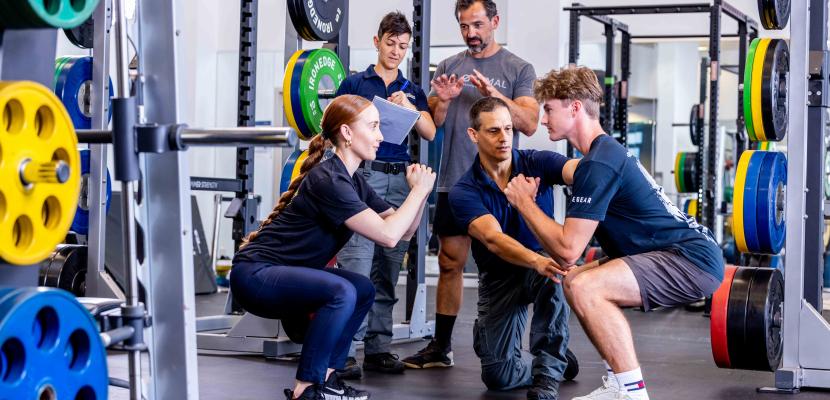
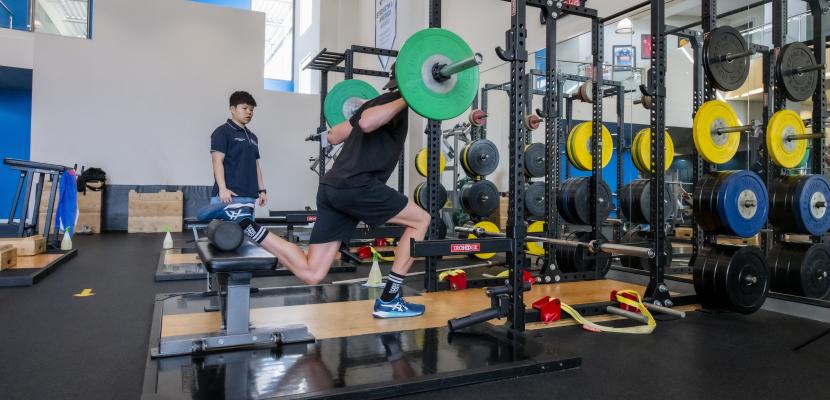
The Faculty’s world-class facilities can be found at Bond University campus, Bond Institute of Health & Sport and the Bond University Clinical Education and Research Centre located at Robina Hospital. Facilities include clinical skills rooms, simulated hospital wards, treatment centres, therapy rooms, laboratories, a community clinic and a High Performance Training Centre. Within these real-world environments, you may work with simulated participants, state of the art technology including virtual and augmented reality and real-life, elite athletes preparing for high-level competitions.
5 stars and #1 in Australia*^ for Teaching Quality, Skills Development, Learner Engagement. Student Support and Learning Resources
5 stars^ for Overall Experience
Postgraduate
5 stars and #1 in Australia*^ for Skills Development
5 stars and #1 in Queensland*^ for Learner Engagement and Overall Experience
5 stars^ for Teaching Quality
* 2023-24 Student Experience Survey. The federal government’s Student Experience Survey is an annual survey of students about their educational experience ^ 2026 Good Universities Guide. The Good Universities Guide is a trusted independent consumer guide providing ratings, rankings and comments about all Australian higher education institutions.
5 stars in and #1 in Australia*^ for Student Support
5 stars and #1 in Queensland*^ for Learner Engagement and Learning Resources
#1 in Queensland*^ for Teaching Quality
5 stars^ for Skills Development
Postgraduate
5 stars and #1 in Australia~^ for Full-time Employment
#1 in Queensland*^ for Learner Engagement
* 2023-24 Student Experience Survey. The federal government’s Student Experience Survey is an annual survey of students about their educational experience ^ 2026 Good Universities Guide. The Good Universities Guide is a trusted independent consumer guide providing ratings, rankings and comments about all Australian higher education institutions. ~ 2022-2024 Graduate Outcomes Survey. The federal government’s Graduate Outcomes Survey is a survey of graduate outcomes 4-6 months after graduation.
5 stars and #1 in Australia*^ for Overall Experience, Teaching Quality, Skills Development, Learner Engagement and Student Support.
5 stars^ for Learning Resources
* 2023-24 Student Experience Survey. The federal government’s Student Experience Survey is an annual survey of students about their educational experience ^ 2026 Good Universities Guide. The Good Universities Guide is a trusted independent consumer guide providing ratings, rankings and comments about all Australian higher education institutions.
5 stars and #1 in Australia~^ for Full-time Employment
5 stars and #1 in Queensland*^ for Teaching Quality, Learner Engagement, Learning Resources and Overall Experience
#1 in Queensland*^ for Skills Development and Student Support
* 2023-24 Student Experience Survey. The federal government’s Student Experience Survey is an annual survey of students about their educational experience ^ 2026 Good Universities Guide. The Good Universities Guide is a trusted independent consumer guide providing ratings, rankings and comments about all Australian higher education institutions. ~ 2022-2024 Graduate Outcomes Survey. The federal government’s Graduate Outcomes Survey is a survey of graduate outcomes 4-6 months after graduation.
Undergraduate
5 stars and #1 in Australia*^ for Teaching Quality, Skills Development, Learner Engagement. Student Support and Learning Resources
5 stars^ for Overall Experience
Postgraduate
5 stars and #1 in Australia*^ for Skills Development
5 stars and #1 in Queensland*^ for Learner Engagement and Overall Experience
5 stars^ for Teaching Quality
* 2023-24 Student Experience Survey. The federal government’s Student Experience Survey is an annual survey of students about their educational experience ^ 2026 Good Universities Guide. The Good Universities Guide is a trusted independent consumer guide providing ratings, rankings and comments about all Australian higher education institutions.
Undergraduate
5 stars in and #1 in Australia*^ for Student Support
5 stars and #1 in Queensland*^ for Learner Engagement and Learning Resources
#1 in Queensland*^ for Teaching Quality
5 stars^ for Skills Development
Postgraduate
5 stars and #1 in Australia~^ for Full-time Employment
#1 in Queensland*^ for Learner Engagement
* 2023-24 Student Experience Survey. The federal government’s Student Experience Survey is an annual survey of students about their educational experience ^ 2026 Good Universities Guide. The Good Universities Guide is a trusted independent consumer guide providing ratings, rankings and comments about all Australian higher education institutions. ~ 2022-2024 Graduate Outcomes Survey. The federal government’s Graduate Outcomes Survey is a survey of graduate outcomes 4-6 months after graduation.
Undergraduate
5 stars and #1 in Australia*^ for Overall Experience, Teaching Quality, Skills Development, Learner Engagement and Student Support.
5 stars^ for Learning Resources
* 2023-24 Student Experience Survey. The federal government’s Student Experience Survey is an annual survey of students about their educational experience ^ 2026 Good Universities Guide. The Good Universities Guide is a trusted independent consumer guide providing ratings, rankings and comments about all Australian higher education institutions.
Postgraduate
5 stars and #1 in Australia~^ for Full-time Employment
5 stars and #1 in Queensland*^ for Teaching Quality, Learner Engagement, Learning Resources and Overall Experience
#1 in Queensland*^ for Skills Development and Student Support
* 2023-24 Student Experience Survey. The federal government’s Student Experience Survey is an annual survey of students about their educational experience ^ 2026 Good Universities Guide. The Good Universities Guide is a trusted independent consumer guide providing ratings, rankings and comments about all Australian higher education institutions. ~ 2022-2024 Graduate Outcomes Survey. The federal government’s Graduate Outcomes Survey is a survey of graduate outcomes 4-6 months after graduation.
A learning experience like no other
All of the academics, researchers and support staff within our Faculty of Health Sciences & Medicine are dedicated to creating a valuable learning experience that will see students enter their industry of choice with the knowledge and skills necessary to hit the ground running, and succeed.
Our academics have spent, and continue to spend, time in industry honing their craft, giving them a comprehensive understanding of how to teach high-level concepts. They also offer their students personalised support.
When it comes to specific programs, students will learn from these incredible minds in highly practical settings – something that’s key to becoming an industry-ready graduate. Many of the subjects within our health sciences and medicine degrees have a hands-on component that will see students learn in a simulated lab or hospital environment, often with ‘simulated’ patient actors. Then, depending on their study area of choice, students may also gain opportunities to put their skills to the test with real patients in clinic, hospital, community or private practice settings.
We also have a strong commitment to student wellbeing, with a team of multidisciplinary staff dedicated to ensuring students have access to services and are supported throughout their studies.
Limitless Opportunities
Standout moments that give our student experience an unbeatable edge
Regardless of the field they pursue, and whatever unique experiences become the highlight of their time at university, our graduates will leave Bond with the confidence, clinical experience and compassion to become a health professional that can make a real difference to people’s lives.
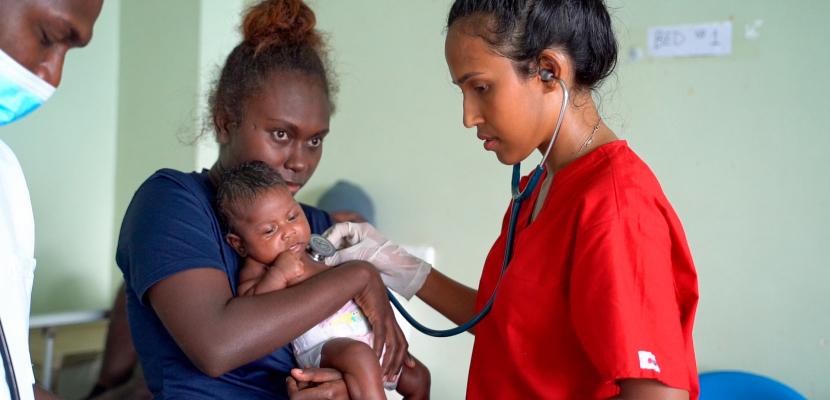
For a medical student, it could be helping to deliver a baby during a placement on a remote island or in a rural Indigenous community.
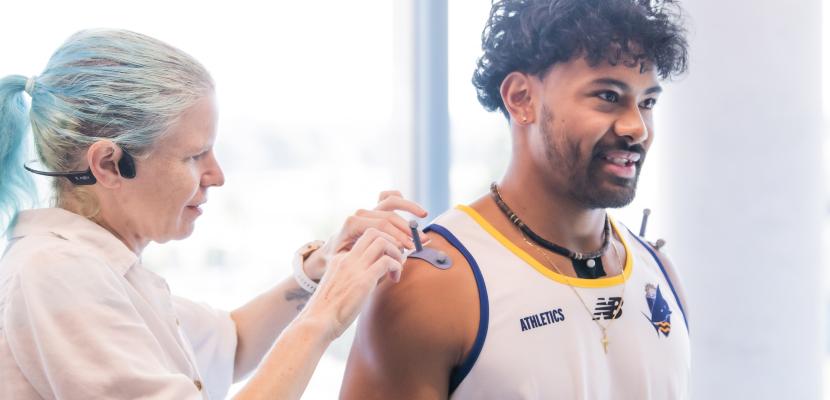
For an allied health student, perhaps it’s working with elite athletes from major national or international sporting teams.
Budding dietitians might undertake an internship or overseas study tour.
Research and PhD candidates could reap the rewards of learning from international experts in one of our world-class research centres, which includes the Clem Jones Centre for Regenerative Medicine.
Where our graduates are now
The professional outcomes for Faculty of Health Sciences & Medicine graduates are boundless, and that’s reflected by our diverse cohort of alumni. Bond graduates will join a talented group of innovators, leaders and big thinkers working across Australia and all around the world.
Oops, something went wrong.
Reshaping occupational therapy for an ageing society
Our commitment to meaningful research
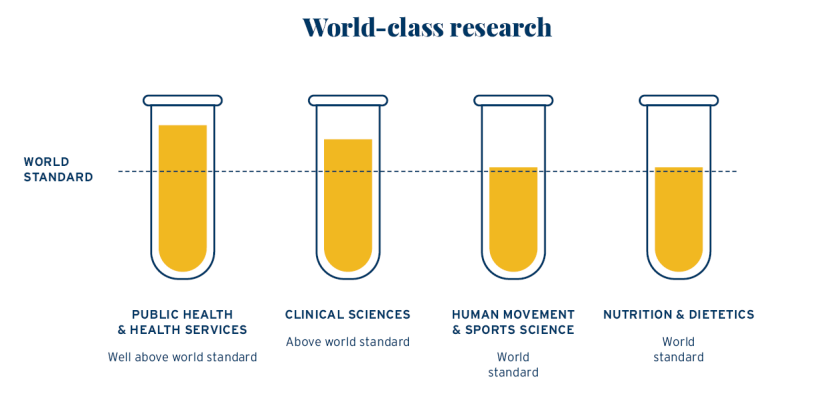
Research is at the core of Bond’s Faculty of Health Sciences & Medicine and is reflected through our comprehensive facilities and the exceptional staff that work on cutting-edge research every day.
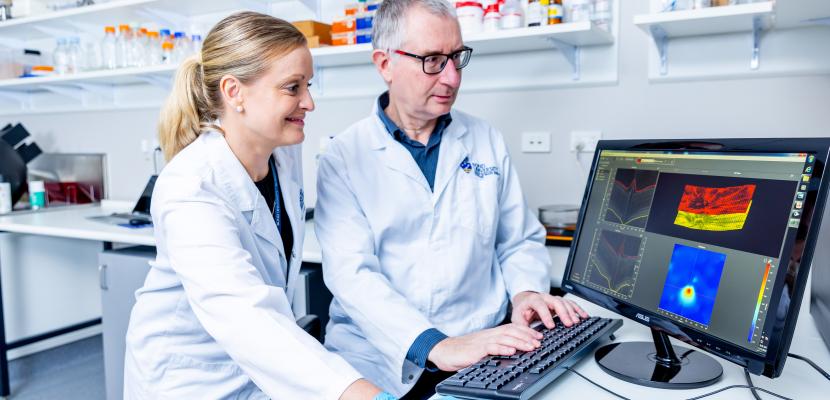
We are home to the internationally-renowned Institute for Evidence-Based Healthcare (IEBH), which is headed up by some of the world’s leading experts in evidence-based medicine and clinical practice. The IEBH produces globally-recognised research across a range of interest areas and works with partner organisations to develop tangible solutions to real-world healthcare problems.
Including IEBH, our faculty is home to five research centres and a plethora of research groups designed to support ongoing research efforts in addition to creating adaptable and reflexive graduates who emerge from their studies ready to problem-solve, challenge dated ideas, and ultimately, enact change.